
It’s fine to build apps just for the money
Nobody demands that plumbers feel passion for pipes, so why do developers apologize for wanting profit? Money is a perfectly good reason to ship.

My wife and I once built an app in about six hours, and it made $26,000. We didn’t build it to change the world, or to scratch some personal itch – we built it because we wanted to visit Japan together, and we needed the money to pay for the trip.
That’s a long-winded way of saying the simple but important truth that profit is a perfectly good reason for building an app.
I’m saying this up front because the software industry has developed a weird hang-up about motives. You’ll have heard countless conference talks or indie dev interviews that say the same thing: I built this to solve my own problem. It was a real passion project for me. Money arrives sheepishly at the end if at all, like we’re embarrassed to even talk about it.
And, look: I get it. Those are wonderful reasons for building software, and I hope you also feel you can work that feels import and impactful.
But it’s not required. Nobody demands that plumbers feel a deep spiritual connection to pipes. Nobody asks an electrician what their “why” is. They do skilled work, they get paid for that work, and everyone thinks that’s a completely normal arrangement. However, if you say “I’m building this app because I think it’ll make money” out loud in a room full of developers, you can watch people shift uncomfortably in their seats.
I’ve been the one doing seat-shifting. I’ve caught myself dressing up straightforwardly commercial decisions in loftier language, because “I wanted the money” felt like something I wasn’t supposed to say. It’s a silly reflex, and I’d like to talk you out of it – partly by telling you about the most mercenary app I ever shipped.
The $26,000 party trick
Years ago my wife and I really wanted to visit Japan, so we built an app together to fund the trip. From idea to App Store took maybe six hours in total, and this was long before the days of AI assistance – it was even long before the days of SwiftUI!
The app was trivial. In fact, it was so trivial it might hurt your head, so brace yourself.
We built the game 20 Questions. You know, the one where you have 20 questions to guess what person, animal, or thing someone else is thinking of?
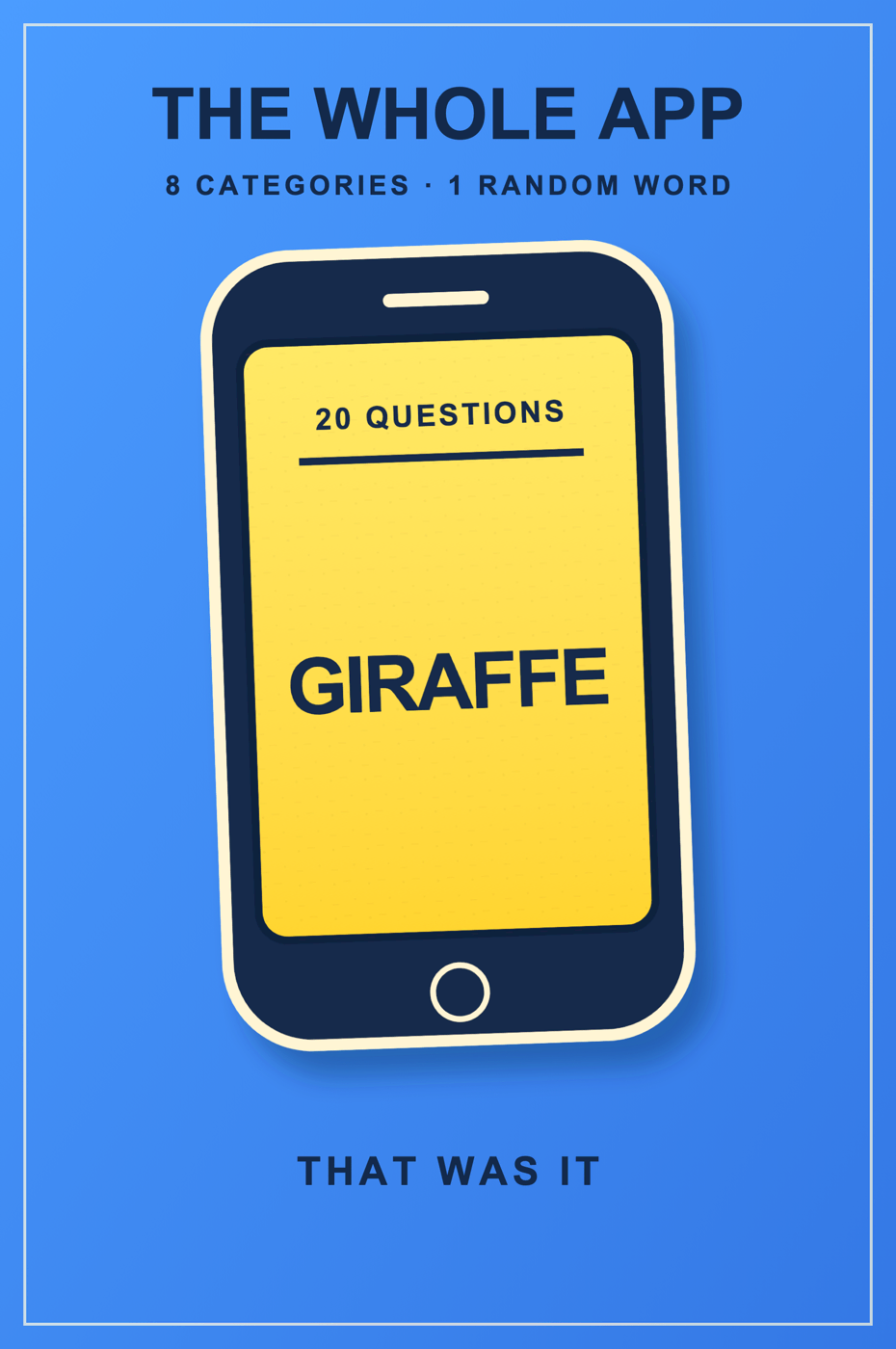 Tap for full-size (opens in a new tab)
Except we didn’t build any kind of advanced logic or clever animations. My wife wrote down eight categories of things that could be in the game, providing each with a bunch of words, and I made a tiny UIKit app that let users pick a category and show one random item in big letters on the screen. Players held their phone against their head so friends could see the word while they couldn’t, and that was literally it – in coding terms it was a list that navigated to a label.
It didn’t even have a pretty user interface. In fact, I would say it had a downright ugly user interface. And it made $26,000 – enough to fly us both to Japan, all expenses paid, and then some.
Was it a passion project? Nope. Did it solve a problem I’d personally suffered with for years? Also no. Was I embarrassed to have made it? Absolutely not – people bought it, used it, and hopefully had fun. Everybody got what they wanted out of the app, which is what a fair trade looks like.
The lesson here isn’t “make party games.” Instead, the lesson is that a simple proposition users immediately understand beats months of soul-searching about your creative purpose. Start small, start simple – because if you’re explaining, you’re losing.
“But I don’t have any ideas”
I often hear people tell me they don’t have any ideas for apps to build, but it’s simply not true – there are ideas everywhere. Heck, I’m drowning in ideas.
On Hacking with Swift+ live streams we’ve built a complete app or game from scratch every single month for years, and I have enough ideas queued up for years more. A menu bar app for upcoming calendar events! A water-tracking widget! An app that teaches regular expressions! An app that turns old iPads into digital photo frames! Ideas have never been the problem.
And if you’re building for money rather than passion, finding an idea gets easier, not harder, because you don’t need an original idea at all – you need a proven one that’s done better.
Here’s your homework, and I mean right now, on a real device:
- Open the App Store, pick any category, and look at the Top Paid charts. A chart position proves recent paid-download momentum in that storefront; it does not reveal profit, costs, refunds, or long-term demand.
- Pick one, press “Ratings & Reviews,” then change “Most Helpful” to “Most Critical.” You are now reading what some paying customers wish it did better – useful evidence, but not a representative survey.
- Identify a recurring unmet outcome, then test a distinct way to deliver it. Apple’s review guidelines prohibit copycats, and intellectual-property law still applies; the opportunity is the customer’s problem, not somebody else’s solution.
If you use my Kickstart app, you can literally select all the competitors you want, then read all the negative reviews at once – it will even summarize them for you, all in one place.
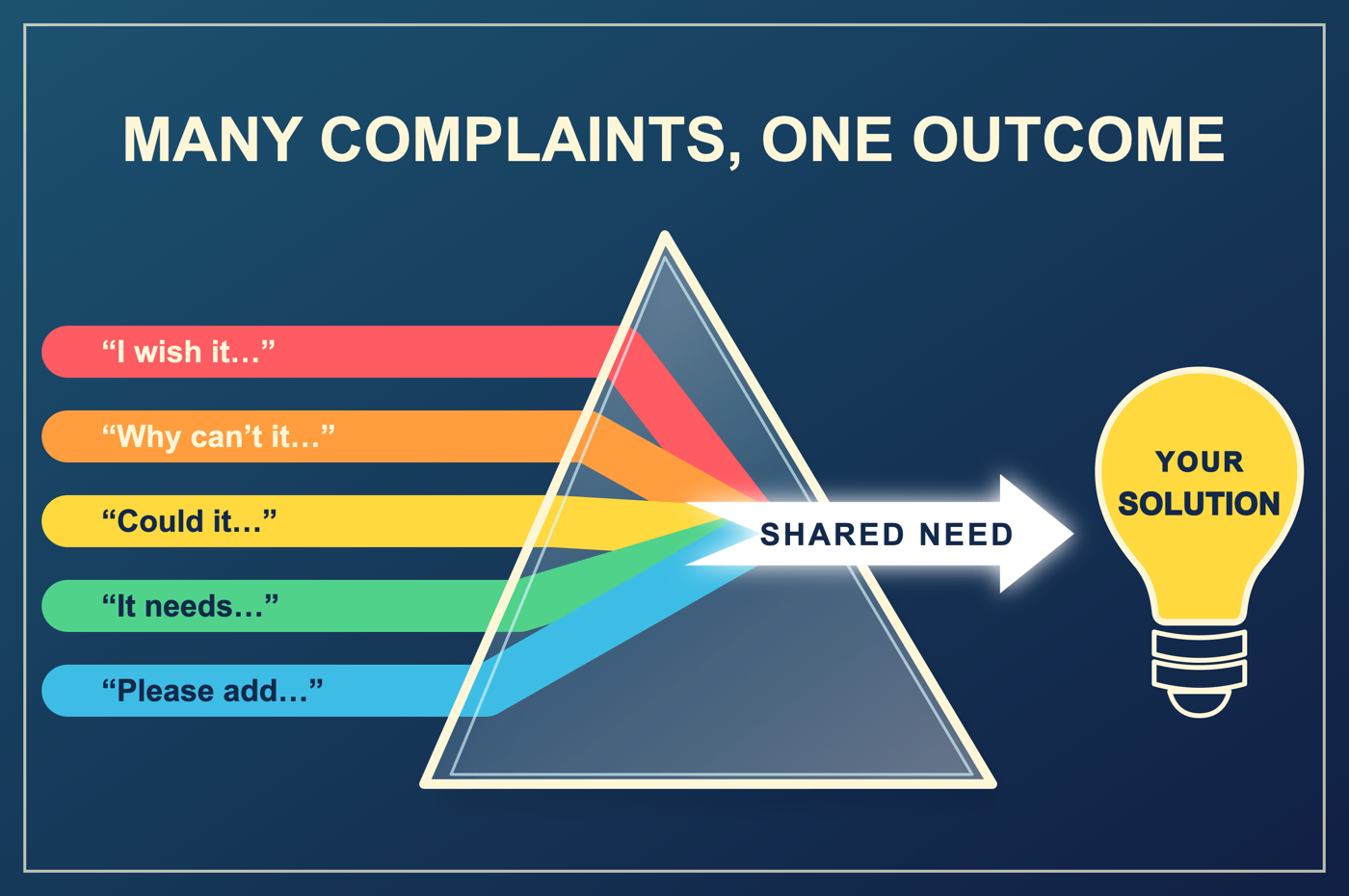
And if you think it can’t be that simple, wrong: it is exactly that simple. Too many folks get lost trying to dream up original ideas nobody has thought of before, when the truth is that users want simple apps that solve specific problems – and the App Store will happily show you which problems people already pay for.
Once you have a shortlist, treat it like the business decision it is: check what people search for, how strong the competition is, and whether target customers will pay for your distinct answer. Services such as Sensor Tower provide modeled download and revenue estimates, not the developer’s receipts. Use them to choose questions, then validate with interviews, a preorder or priced landing page, or a manual paid service.
“Isn’t that a bit soulless?”
“But apps built just for money are cynical shovelware!”
Some are, sure, and I’m not suggesting you should ship junk. Instead, motive and quality are separate axes: plenty of passion projects are unusable, and plenty of “I did it for the money” apps are polished, reliable, and loved – because when your income depends on reviews and refunds, you have a very sharp incentive to make the thing good. Wanting to get paid doesn’t make you a grifter; shipping garbage does, whatever the motive.
And no, AI hasn’t made this pointless. Iris Iványi recently said something striking about this that I want to quote wholesale:
“In a world where anyone can build anything, most won’t. If previous consumer behavior tells us anything, it’s that we value convenience and others’ taste way more than we think. Even in systems designed for flexibility like Notion, people buy templates. To be able to make anything is too much choice, which is its own kind of friction. Most of us don’t want infinite freedom, we want a strong opinion to follow.”
I could not agree more. People don’t want to build their own tools – they want someone to make something great on their behalf, that they can pluck off a shelf and put to use immediately. That someone is you, in case it wasn’t obvious. And as Simon Willison put it, “quitting programming as a career right now because of LLMs would be like quitting carpentry as a career thanks to the invention of the table saw” – he co-created Django, so I think he knows a thing or two!
Modern tools can reduce parts of the work, including coding, research, and first drafts. But they don’t remove design, QA, support, marketing, maintenance, or most importantly your product judgement – which is exactly why a finished, opinionated app still has value.
So build the passion project if you have one; I hope you do, and I hope it thrives. But if what you have instead is a mortgage, a trip you want to take, or just the entirely reasonable desire to be paid for skilled work, then build for that. You don’t owe anyone a nobler story.
Stop reading, start doing
- Say it out loud, just once: “I want to make an app that makes money.”
- Open the Top Paid chart in one App Store category tonight and read the most critical reviews of the top three apps.
- Write down one repeated complaint you could address differently, then ask five target users whether it matters and test one paid signal before you build.
Your trip to Japan is waiting!